

Creatine
When Is the Best Time to Take Creatine?

Jul
Wondering when Is the Best Time to Take Creatine?. Creatine has long been a cornerstone supplement in the world of sports nutrition and bodybuilding. Whether you’re chasing muscle gains, strength improvements, or enhanced recovery, creatine delivers proven results. But one question continues to spark debate among athletes and gym-goers alike: when is the best time to take creatine?

Should you take creatine before or after a workout? Can you take it on an empty stomach? Does timing really matter, or is consistency more important?
In this 2025 guide, we’ll break down the science, clear up the confusion, and help you build a creatine routine that actually supports your fitness goals.
What Is Creatine and Why Does Timing Matter?
Creatine is a naturally occurring compound stored in your muscles. It plays a critical role in energy production, particularly during short bursts of high-intensity exercise. When you supplement with creatine, you increase your muscles’ phosphocreatine stores, allowing your body to regenerate ATP (adenosine triphosphate) more quickly. This means more reps, more power, and better overall performance. When Is the Best Time to Take Creatine?
Timing matters because the effectiveness of creatine uptake can be influenced by your body’s insulin levels, food intake, blood flow, and exercise state. While creatine doesn’t deliver immediate energy like caffeine, taking it at the right time can enhance muscle saturation and long-term benefits.
When should You Take Creatine Before or After Your Workout?
This is one of the most commonly asked questions and for good reason. Many fitness enthusiasts want to optimize every aspect of their supplement stack, and timing is a big piece of the puzzle.
Let’s explore both options:
Taking Creatine Before a Workout
Taking creatine before your workout can help provide readily available energy to your muscles during training. If you’re doing explosive movements, heavy resistance training, or high-intensity interval work, it makes sense to have creatine in your system ahead of time.
The ideal window is 30 to 60 minutes before training, preferably with a small meal or a pre-workout drink that contains some carbohydrates. Carbs increase insulin response, which may help transport creatine into your muscle cells more effectively.
However, creatine doesn’t work acutely like stimulants. You’re not going to “feel” a boost right after taking it, because its power lies in accumulating in your muscles over time.
Taking Creatine After a Workout
Many experts and studies now lean toward post-workout creatine as slightly more effective. After exercise, your muscles are primed for nutrient absorption. Your cells are more sensitive to insulin, and your body is in a recovery state.
Ingesting creatine post-workout, especially when combined with protein and carbohydrates, may enhance muscle recovery and promote greater gains in lean muscle mass over time.
One well-known study published in the Journal of the International Society of Sports Nutrition found that participants who took creatine after workouts gained more muscle and strength than those who took it before.
So, Which Is Better on When you should take creatine?
The truth is, both timing options work as long as you take creatine consistently. But if you had to choose just one optimal time, post-workout creatine (paired with protein and carbs) may offer a slight edge for muscle growth and recovery.
Can You Take Creatine on an Empty Stomach?
Yes, you absolutely can take creatine on an empty stomach but should you?
Some users prefer taking their supplements first thing in the morning, especially if they train fasted or follow intermittent fasting protocols. Creatine itself is not affected by the absence of food, and it doesn’t require calories to function.
However, some people may experience mild digestive discomfort when taking creatine without any food. This can include bloating, cramping, or a sour stomach, particularly if using higher doses or during the loading phase.
On the flip side, taking creatine with food especially carbs can increase insulin secretion, which helps shuttle creatine into the muscles more efficiently.
So if you tolerate it well, there’s no harm in taking creatine on an empty stomach. But if you feel uncomfortable, it’s best to pair it with a light meal or shake.
How Long Before a Workout Should You Take Creatine?
If you prefer pre-workout timing, take creatine around 30 to 60 minutes before you train. This gives your body enough time to digest and begin the absorption process.
Combining creatine with a fast-acting carbohydrate (like fruit juice or a sports drink) can help raise insulin levels and potentially improve the rate at which creatine enters muscle cells. You can also combine it with your regular pre-workout supplement if you’re not sensitive to stimulants.
Remember, creatine is not like caffeine it doesn’t provide immediate energy. Its true benefits come from building up in your muscles over time. So whether it’s 20 minutes or 90 minutes before training isn’t as critical as consistent daily intake.
What About Creatine on Rest Days?
This is where many people get it wrong. On rest days, you still need to take creatine to keep your muscle stores saturated.
Skipping creatine on non-training days can reduce its overall effectiveness, especially if you’re using a lower daily maintenance dose (3–5 grams).
Most users find it easiest to take creatine with breakfast or their morning protein shake on off days. The specific time doesn’t matter much just be consistent.
Does Timing Even Matter That Much?
In the big picture, the most important factor is consistency. Creatine works by gradually increasing the concentration of phosphocreatine in your muscles. It’s not a quick-fix supplement it’s a long-term tool.
That said, optimal timing can offer minor advantages, especially when paired with nutrient timing strategies (e.g., protein and carb intake post-workout).
If you’re already training hard, eating well, sleeping enough, and taking creatine daily, then optimizing your timing is just the final 5% but for some athletes, that 5% can make a big difference.
Creatine Stacking: Get More from Your Timing
To get the most out of creatine timing, consider stacking it with complementary ingredients:
- Beta-Alanine: Helps buffer lactic acid and improve endurance
- Whey Protein: Enhances muscle recovery and protein synthesis post-workout
- Fast-digesting carbs: Boost insulin response and creatine uptake
- BCAAs or EAAs: Support recovery, especially if training fasted
You can add creatine to your post-workout protein shake or pre-workout drink depending on your schedule. Just remember to hit your daily dose and drink enough water throughout the day.
Benefits of Creatine: Why It’s One of the Best Supplements
Creatine is one of the most researched and effective supplements in sports nutrition. Here’s a detailed look at its key benefits:

- Increased Muscle Strength and Power
- Creatine boosts your muscles’ ability to produce energy during high-intensity, short-duration exercises like weightlifting and sprinting. This leads to greater strength gains and improved power output.
- Enhanced Muscle Growth (Hypertrophy)
- By allowing you to perform more reps and recover faster, creatine indirectly supports muscle growth. It also causes muscles to hold more water, making them look fuller and aiding in long-term muscle development.
- Improved Recovery
- Creatine helps reduce muscle damage and inflammation following exercise, speeding up recovery time so you can train harder and more frequently.
- Increased Endurance for High-Intensity Training
- While creatine is primarily known for strength gains, it also improves performance in repeated bouts of high-intensity efforts by replenishing ATP stores faster.
- Cognitive Benefits (Emerging Research)
- Some studies suggest creatine may support brain function, memory, and reduce mental fatigue, especially in stressful or sleep-deprived conditions.
Before and After Results of Creatine Supplementation on Muscle Size
Creatine supplementation has been widely studied and shown to significantly impact muscle size and performance. Many users report visible changes after several weeks of consistent creatine use, supported by scientific research demonstrating increased muscle volume and strength.
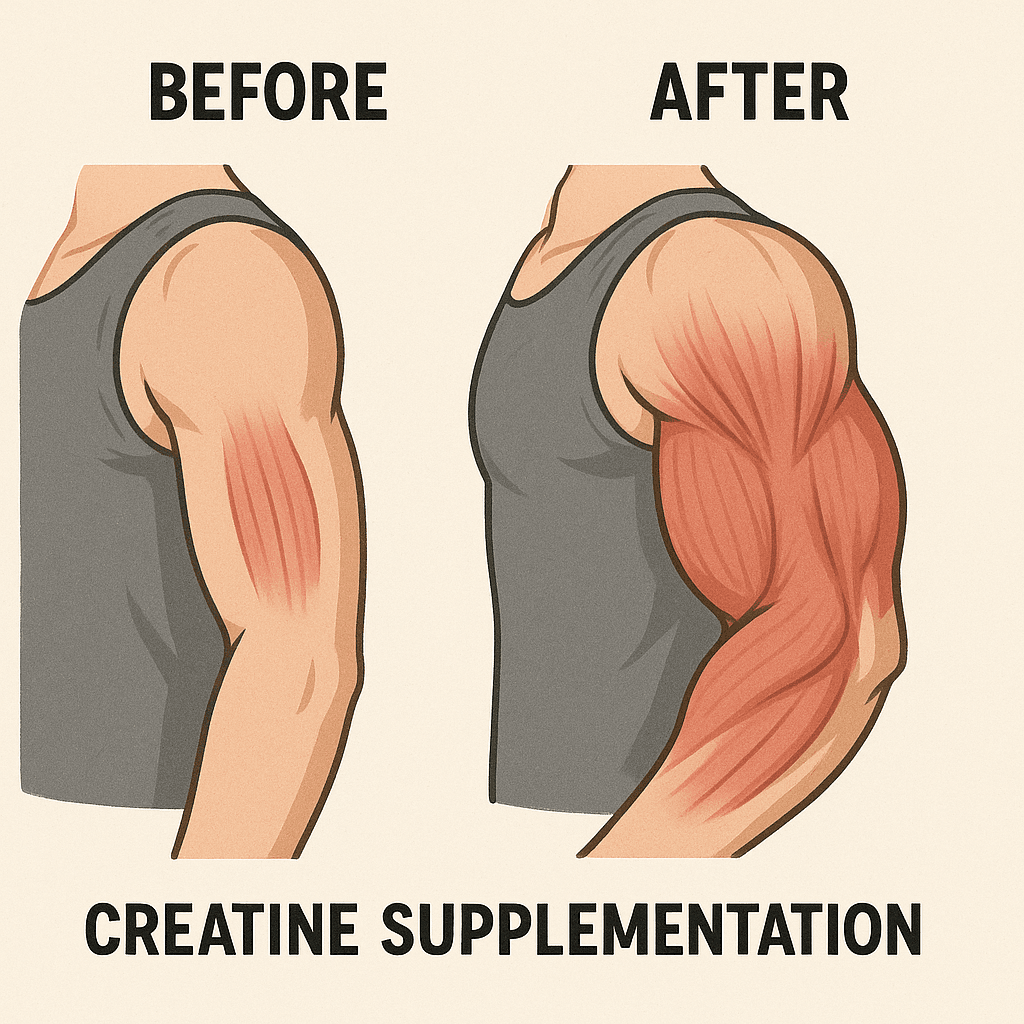
How Creatine Affects Muscle Size:
- Increased Water Retention in Muscles: Creatine draws water into muscle cells, increasing cell volume. This “cell swelling” makes muscles appear fuller and larger even before muscle fibers grow.
- Enhanced Muscle Protein Synthesis: By improving energy availability during training, creatine allows for more intense workouts, promoting greater muscle fiber growth over time.
- Improved Recovery and Reduced Muscle Breakdown: Creatine supports faster recovery between sets and after exercise, allowing for more frequent and effective training sessions.
Typical Before and After Timeline:
- Week 1-2: Users often notice increased muscle fullness due to water retention, along with a boost in workout energy and endurance.
- Week 3-6: Visible gains in muscle size begin as actual muscle fibers adapt and grow stronger from improved training capacity.
- Beyond Week 6: Continued use results in more substantial hypertrophy (muscle growth), improved strength, and better overall physique.
Scientific Evidence:
In a meta-analysis of several creatine studies, participants supplemented with creatine showed an average increase in lean body mass of about 1-2 kg (2.2-4.4 lbs) over 4 to 12 weeks compared to placebo groups. This increase corresponds to both muscle growth and water retention effects.
Before and After Visual Example:
- Before Creatine Supplementation: Muscle size appears less full, with lower training intensity and shorter endurance.
- After 6 Weeks of Creatine Supplementation: Muscles look visibly larger and more defined due to increased cell hydration and actual muscle fiber growth. Strength and performance in the gym are noticeably improved.
Side Effects and Safety: What You Need to Know
Creatine is generally considered very safe when taken at recommended doses, but it’s important to understand potential side effects and how to avoid them:
- Common Side Effects
- Digestive discomfort: Some people experience bloating, cramping, or nausea especially if taking large doses at once or on an empty stomach. Starting with smaller doses and taking it with food can help.
- Water retention: Creatine pulls water into muscle cells, which may cause slight weight gain and a “bloated” feeling. This is normal and usually temporary.
- Rare Side Effects
- Kidney or liver damage is often rumored but not supported by scientific evidence in healthy individuals using recommended doses. If you have pre-existing kidney or liver conditions, consult a doctor first.
- How to Minimize Side Effects
- Stay well hydrated throughout the day.
- Avoid mega loading doses if you have a sensitive stomach.
- Split daily creatine doses into smaller servings.
- Take creatine with carbs or a light meal if you experience nausea.
- Who Should Avoid or Be Cautious?
- People with kidney disease or diabetes should talk to their healthcare provider before starting creatine.
- Pregnant or breastfeeding women should avoid creatine supplementation until more safety data is available.
For info Visit our hompage
