
Fitness & Nutrition
Can You Build Muscle in a Calorie Deficit?

Apr
Can You Build Muscle in a Calorie Deficit?
Introduction
Can you gain muscle in a calorie deficit? (Building Muscle in a Calorie Deficit Explained). Most people assume fat loss and muscle gain cannot happen at the same time. The logic seems simple: if you eat fewer calories than you burn, your body has less energy to build new muscle tissue.
This leads to the traditional fitness model of bulking (muscle gain in surplus) and cutting (fat loss in deficit).
However, real-world training outcomes and modern exercise science show a more nuanced reality.
Yes, you can build muscle in a calorie deficit, but only under specific conditions. It is not the best method for muscle growth, but it can work for beginners, people with higher body fat, and returning trainees.
Energy Balance Overview
| Energy State | Intake vs Burn | Primary Outcome | Muscle Gain Potential |
|---|---|---|---|
| Surplus | Higher intake | Weight gain | High |
| Maintenance | Equal intake | Stable weight | Moderate |
| Deficit | Lower intake | Fat loss | Conditional |
A caloric deficit does not shut down muscle growth, it simply reduces available energy, making efficiency more important.
Muscle Growth Mechanism (Why It Still Works)
- can you build lean muscle in a calorie deficit
- fat and build muscle
This is why many people ask, can you build lean muscle in a calorie deficit, when trying to lose fat and build muscle. In some cases, you can actually lose fat and build muscle at the same time, but only under the right training and nutrition conditions.
Muscle growth is controlled by two processes:
- Muscle Protein Synthesis (MPS) → builds muscle
- Muscle Protein Breakdown (MPB) → breaks down tissue
Muscle is gained when MPS exceeds MPB over time. This is how people can lose fat and gain muscle at the same time, especially during body recomposition.
Even in a calorie deficit, this balance can still be positive if the right conditions are present:
- resistance training stimulus
- sufficient protein intake
- adequate recovery
- available stored body fat
Who Can Build Muscle in a Calorie Deficit?
- body recomposition calorie deficit
| Group | Muscle Gain Potential | Reason |
|---|---|---|
| Beginners | High | Strong training adaptation response |
| Higher body fat individuals | Moderate–High | More stored energy available |
| Returning lifters | High | Muscle memory effect |
| Advanced lean lifters | Low | Limited energy availability |
This is where body recomposition calorie deficit becomes realistic, especially for beginners and higher body fat individuals.
How to Build Muscle in a Calorie Deficit (Practical Protocol)
1. Moderate Calorie Deficit
- Aim for 10–20% below maintenance
- Avoid aggressive dieting (>25%)
2. High Protein Intake
- Target: 1.6–2.2g per kg body weight
- Spread across 3–5 meals daily
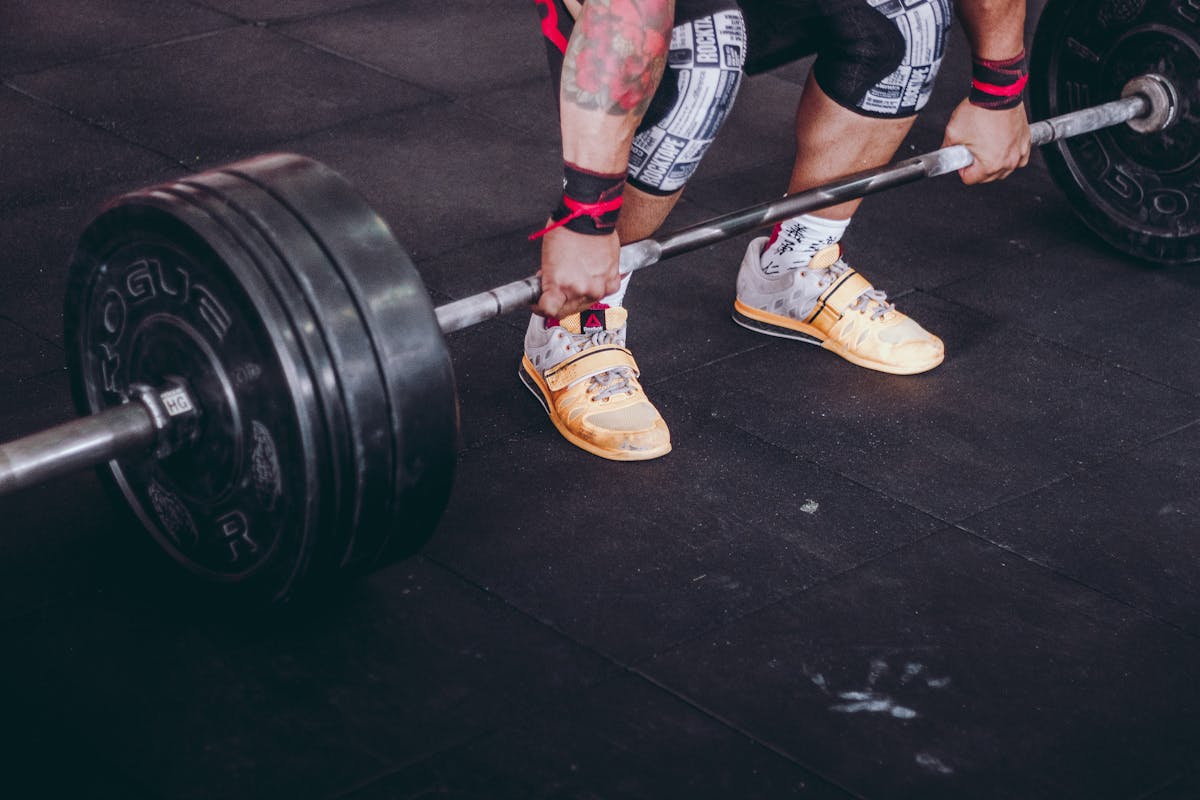
3. Resistance Training
- Compound lifts (squat, press, deadlift, row)
- Resistance exercises are the main driver of muscle gain in a deficit.
- Train each muscle group 2–3x per week
4. Controlled Cardio
- Support fat loss
- Avoid excessive endurance volume
- Do not replace strength training
5. Recovery Optimization
- 7–9 hours sleep
- Stress management
- Rest days between sessions
Recovery is also important if someone has used performance-enhancing compounds. In those cases, post-cycle therapy (PCT) may be used with professional guidance.It can help restore natural hormonal balance. You can read more about PCT support options here:
PCT support supplement
Scientific Evidence
Research consistently shows that higher protein intake combined with resistance training improves lean mass retention during calorie restriction:
👉 International Society of Sports Nutrition Position Stand on Protein
Further clinical research confirms that enough protein and resistance training can preserve or increase lean mass. This can happen even during a calorie deficit:
👉 Protein Intake and Body Composition Study
Why Weight Loss Sometimes Appears to Stall
Even when you are in a calorie deficit, fat loss may not appear linear due to:
| Factor | Effect |
|---|---|
| Water retention | Masks fat loss temporarily |
| Glycogen fluctuations | Changes scale weight |
| Stress | Increases fluid retention |
| Tracking error | Miscalculated calorie intake |
A deeper breakdown of this is explained here:
👉 Why You’re Not Losing Weight in a Calorie Deficit
Expected Progress Timeline
| Phase | What Happens |
|---|---|
| Weeks 1–2 | Strength stabilises, minimal visible change |
| Weeks 3–6 | Fat loss becomes visible, strength holds |
| Weeks 6–12 | Clear recomposition (leaner, more defined physique) |
Recommendations (What Actually Works)
Minimum effective setup:
- Moderate calorie deficit (not extreme)
- High daily protein intake
- Structured resistance training program
- Consistent sleep schedule
Optimised approach:
- Slight deficit with progressive overload training
- Protein evenly distributed across meals
- Controlled cardio
- Recovery prioritised above volume
What to avoid:
- Crash dieting
- Random workouts without progression
- Low protein intake
- Excessive cardio replacing strength training
When Muscle Gain in a Calorie Deficit Fails
Muscle gain becomes unlikely when:
- Deficit is too large
- Protein intake is too low
- Training is inconsistent
- Recovery is poor
- Body fat is already low and training experience is high
At that point, the body prioritises survival over growth.
Key Insight (What Most People Miss)
Muscle gain in a calorie deficit is not a “special trick”.
It is a resource allocation problem.
Your body constantly decides:
Do I use energy to build muscle, store fat, or maintain survival?
You can influence this decision by:
- signaling demand through training
- supplying building blocks via protein
- providing enough energy buffer via fat stores
- ensuring recovery through sleep and rest
When these align, recomposition happens naturally. When they don’t, it fails regardless of calorie math.
Overall, can you build muscle in a calorie deficit is possible, but only when the right conditions are consistently met.
When Muscle Gain in a Calorie Deficit Fails
Even though it is possible to build muscle in a calorie deficit, it does not always work. It usually fails when the setup is wrong.
Muscle gain becomes unlikely when:
- The calorie deficit is too large
- Protein intake is too low
- Training is inconsistent or too easy
- Recovery (sleep and rest) is poor
- You are already lean and advanced in training
When these happen, your body focuses more on saving energy and survival rather than building new muscle.
At that point, you may still lose fat, but muscle growth will slow down or stop completely.
FAQ
Can you still build muscle in a calorie deficit?
Yes, especially for beginners, higher body fat individuals, and returning lifters.
Can you gain muscle while losing fat?
Yes, this is called body recomposition.
Do you lose muscle in a calorie deficit?
Not necessarily, if protein intake and resistance training are sufficient.
Why is muscle gain slower in a deficit?
Because energy availability is reduced, limiting recovery and growth capacity.
Is it possible to build muscle in a calorie deficit?
Yes, it is possible. It just depends on your starting point. Beginners, people with more body fat, and people coming back to training can often build muscle while losing fat. If you’re already lean and experienced, it becomes much harder.
How to build muscle in a calorie deficit?
You need a few basic things done right:
- lift weights consistently
- try to get stronger over time
- eat enough protein every day
- don’t cut calories too aggressively
If you combine training, protein, and a small deficit, your body can still build muscle.
Do you lose muscle in a calorie deficit?
Not always. If you are lifting weights and eating enough protein, you can keep most of your muscle. Muscle loss usually happens when the diet is too extreme, training is missing, or protein intake is too low.
Can beginners build muscle in a calorie deficit?
Yes. Beginners are the most likely to build muscle while losing fat. Their bodies respond quickly to training, especially in the first few months.
Why is it hard to build muscle in a calorie deficit?
Because your body has less energy available. Muscle growth needs energy for recovery and repair. In a calorie deficit, the body prioritizes fat loss and basic survival. It does this instead of building new muscle.
Conclusion
The real answer to can you gain muscle in a calorie deficit depends on a few things. You need good training. You need enough protein. You also need proper recovery. It also depends on whether your goal is true body recomposition calorie deficit or maximum muscle gain.
It works best when:
- training is progressive
- protein intake is high
- calorie deficit is moderate
- recovery is consistent
For beginners and higher body fat individuals, recomposition is highly achievable. For advanced lifters, a calorie surplus remains more effective for maximum muscle growth.
The key takeaway is simple:
Muscle gain depends less on a calorie deficit and more on how well you manage training, protein, and recovery.
